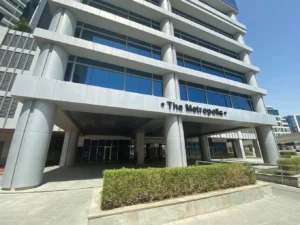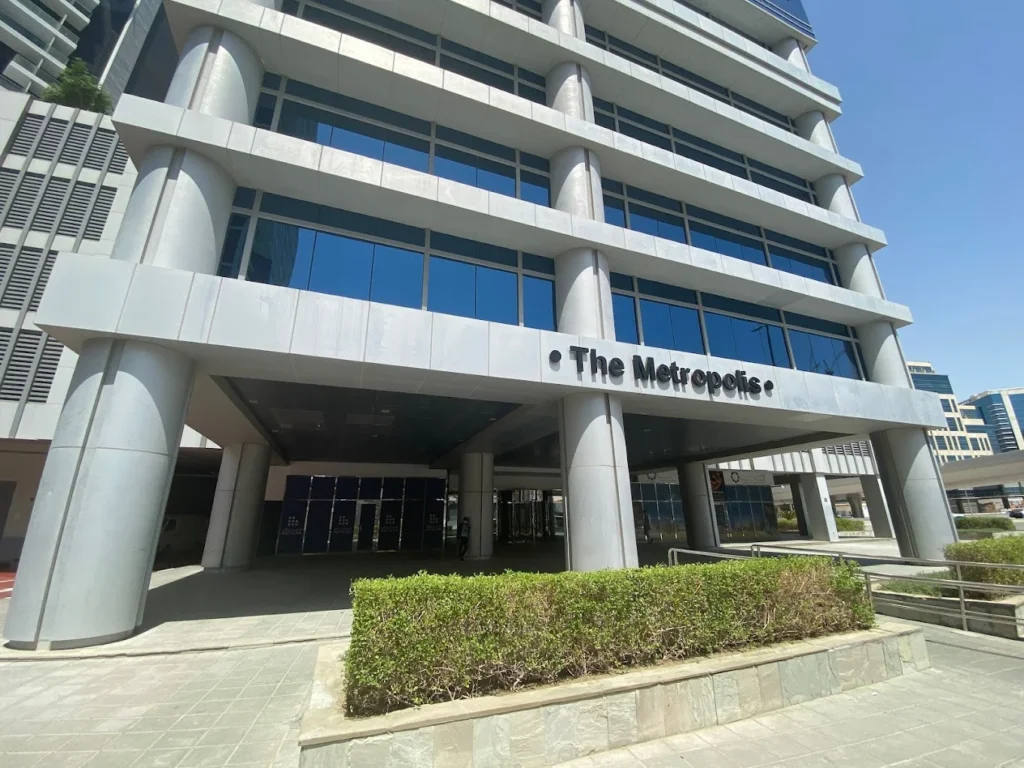
Commercial investors are paying closer attention to The Metropolis Tower Business Bay Dubai as office demand patterns continue to shift ahead of 2026. Changes in tenant expectations, tighter regulatory frameworks, and post-2025 leasing behaviour are reshaping how businesses assess commercial office space in Business Bay. This analysis focuses on verified market signals, leasing behaviour, and sector trends to help investors, owners, and occupiers make informed decisions based on real demand rather than assumptions.
Office Demand Outlook for Business Bay in 2026
Office demand across Business Bay is expected to remain stable through 2026, supported by ongoing interest from finance firms, regional headquarters, and professional service providers seeking centralised office locations. Leasing activity increasingly reflects longer-term commitments rather than short stays, indicating a more mature tenant base that also influences related decisions such as Where to stay in Dubai for business travel and extended corporate operations.
Infrastructure enhancements, stricter compliance requirements, and a preference for professionally managed buildings are influencing leasing decisions. As a result, demand growth is projected to remain steady rather than sharply accelerated. For stakeholders, this signals a market shaped by operational efficiency, risk awareness, and consistency instead of short-term cycles within the Business Bay office market.
Why Commercial Demand Forecasts Matter in Business Bay 
Commercial demand forecasting plays a practical role in reducing uncertainty around leasing, pricing strategies, and long-term asset planning. Reliable projections help investors assess future occupancy pressure, anticipate rental yield movement, and align acquisitions with realistic absorption capacity within .
- Provides clarity on future office availability, helping occupiers plan space requirements with confidence
- Supports more accurate budgeting by setting realistic rental and operational cost expectations
- Helps businesses time leasing decisions effectively, reducing pressure from sudden market shifts
- Lowers exposure to unexpected rental adjustments through data-backed forecasting
- Supports sustainable business growth in an area shaped by policy changes, economic diversification, and evolving work models
Office Supply Pipeline Heading Toward 2026
The office supply pipeline in Business Bay moving into 2026 reflects a more controlled development cycle than previous expansion phases. New commercial completions are increasingly shaped by pre-leasing commitments, planning approvals, and tighter financing conditions, limiting speculative oversupply.
Upcoming projects are focusing on efficient floor layouts, energy compliance, and predictable operating costs. This aligns with tenant demand for long-term cost visibility and regulatory readiness, supporting occupancy stability across established commercial zones rather than untested developments.
Tenant Demand Patterns After 2024
Tenant behaviour after 2024 shows a clear shift toward efficiency-driven office requirements. Businesses are prioritising flexible layouts, manageable lease terms, and transparent service charges rather than oversized premium offices. Mid-sized companies and regional headquarters increasingly favour buildings that offer reliable facilities management and regulatory compliance.
Accessibility, parking availability, and service quality now carry greater weight in site selection. These patterns indicate disciplined leasing decisions driven by operational planning, shaping demand behaviour through 2026 across the Dubai commercial property landscape.
Corporate Relocation and Office Absorption
Corporate relocation activity is becoming a key driver of office absorption in Business Bay. Multinational firms relocating regional headquarters to Dubai are prioritising regulatory clarity, proximity to financial districts, and scalable layouts that support phased growth.
At the same time, regional enterprises are consolidating multiple offices into centrally managed locations to improve efficiency and reduce overheads. This has increased demand for mid-to-large floor plates, particularly among finance, consulting, and technology firms seeking stability rather than short-term flexibility. These relocation trends are directly influencing absorption rates as companies adopt data-led space planning.
SME Growth and Leasing Volume Impact
Small and medium-sized enterprises are contributing meaningfully to leasing activity as 2026 approaches. Increased company registrations in consulting, fintech support, e-commerce, and regional trading services are driving demand for efficient office units that balance cost control with professional infrastructure.
Many SMEs prefer mid-sized offices with flexible terms and predictable charges, increasing transaction frequency even as average unit sizes moderate. This pattern supports diversified tenant mixes and steady occupancy, reducing reliance on a small number of large tenants and improving leasing liquidity within office demand trends Dubai.
Enterprise Tenants and Startups: Changing Space Preferences 
Enterprise tenants and startups are approaching office decisions with different priorities. Larger organisations favour long-term leases, private layouts, and infrastructure supporting compliance and data security. Startups, by contrast, prefer smaller footprints, flexible terms, and shared amenities that allow rapid adjustment as business needs change.
These preferences are influencing how landlords configure floor plans, with rising demand for adaptable layouts that can serve both established companies and agile teams. Space efficiency, rather than size alone, is now central to leasing decisions.
Hybrid Work Policies and Office Size Decisions
Hybrid work policies are reshaping office size requirements across Business Bay. Many companies are reducing fixed desk allocations in favour of shared zones and collaboration-focused layouts, lowering total space requirements without compromising productivity.
This shift has increased interest in modular floor plans and shorter lease structures that allow businesses to adapt as workforce patterns evolve. Buildings capable of accommodating flexible configurations are seeing stronger leasing interest due to improved cost control and operational resilience.
Short-Term Versus Long-Term Lease Demand
Demand patterns show a clear divide between short-term and long-term leases. Short-term agreements appeal to startups, international firms entering the UAE market, and project-based teams seeking flexibility. Long-term leases continue to attract established businesses focused on cost predictability and operational stability.
This split reflects a broader shift in tenant risk management. Property owners who understand these preferences can better align pricing strategies, lease structures, and occupancy planning.
Sector-Specific Demand From Finance and Technology Firms
Finance and technology firms continue to shape sector-driven demand in Business Bay. Financial institutions favour structured layouts supporting compliance and client-facing operations, sustaining interest in medium to large offices. Technology firms prioritise adaptable spaces that support team scaling and future infrastructure upgrades.
Both sectors prefer buildings offering reliable connectivity, regulatory readiness, and operational stability, reinforcing strategic leasing decisions aligned with long-term growth rather than short-term savings.
Rental Price Sensitivity Among New Tenants
Rental price sensitivity among new tenants is increasing as businesses reassess operating costs. Occupiers are comparing lease rates alongside build quality, service charges, and contract flexibility rather than relying solely on location appeal.
Recent leasing behaviour shows growing demand for transparent pricing, shorter lock-in periods, and incentives that reduce upfront costs. This trend rewards value-driven commercial offerings that balance compliance, accessibility, and scalability.
Infrastructure and Amenities Influencing Occupancy 
Infrastructure access remains a decisive factor in leasing decisions. Proximity to Sheikh Zayed Road, Al Khail Road, and Dubai Metro links significantly affects commute reliability for employees and clients. Parking availability, last-mile connectivity, and nearby business amenities also contribute to long-term workplace viability.
Occupancy retention is increasingly influenced by practical amenities such as high-speed connectivity, power backup, secure access systems, and responsive maintenance. These factors directly impact productivity, compliance, and tenant satisfaction.
Tenant Retention and Lease Renewal Behaviour
Tenant retention in competitive office zones is now driven by operational value rather than branding. Predictable service charges, responsive management, and flexible renewal terms are key factors influencing lease extensions.
Data shows a clear distinction between new lease signings and renewals. New tenants often negotiate shorter commitments, while renewals reflect stability-focused decision-making. This balance supports a more sustainable leasing environment shaped by risk management.
Regulatory and Compliance Considerations
Regulatory and compliance requirements are increasingly central to occupancy decisions. Stricter licensing, enhanced reporting obligations, and updated tenancy regulations are encouraging businesses to prioritise buildings already aligned with government standards.
Sustainability guidelines and safety benchmarks are also influencing demand, particularly among regulated industries. Compliance-ready buildings are better positioned to attract and retain tenants through 2026.
What Demand Signals Mean for Property Owners
Demand signals for 2026 indicate a more selective tenant base with higher expectations around value, flexibility, and management quality. Owners who align lease terms with market pricing, maintain transparent charges, and focus on retention strategies are likely to achieve stronger occupancy consistency.
Steady income performance driven by long-term tenants may outweigh rapid rental growth, supporting resilient asset performance.
Strategic Insights for Long-Term Buyers
Buyers planning long-term holding should prioritise assets aligned with sustained demand rather than short-term leasing spikes. Properties attracting regulated businesses, professional services firms, and multi-year leases typically show lower vacancy risk.
Analysing infrastructure upgrades, compliance readiness, and service charge trends can further support value preservation and predictable income over time within Business Bay real estate investment strategies.
Outlook Beyond 2026
Commercial office demand beyond 2026 will increasingly depend on tenant quality, regulatory clarity, and adaptability to evolving business needs. Sustainable occupancy will be shaped by infrastructure readiness and professional management rather than temporary market shifts.
At UAE Explorer Zone, we focus on delivering reliable, data-backed market analysis to support informed, forward-looking decisions for investors and commercial property stakeholders operating in Business Bay.